
How a name and a feeling became a full brand system, drawn from Slavic ritual.
How do you build a brand when there is nothing to start from?
You start with the feeling and give it a system. Lusha Living came to Cue Studio as a name and a feeling, with no logo, no palette, and no rules. The work turned that blurry starting point into a structured visual brand system applied across more than a dozen touchpoints.
This is a case study in building a brand from the name out.
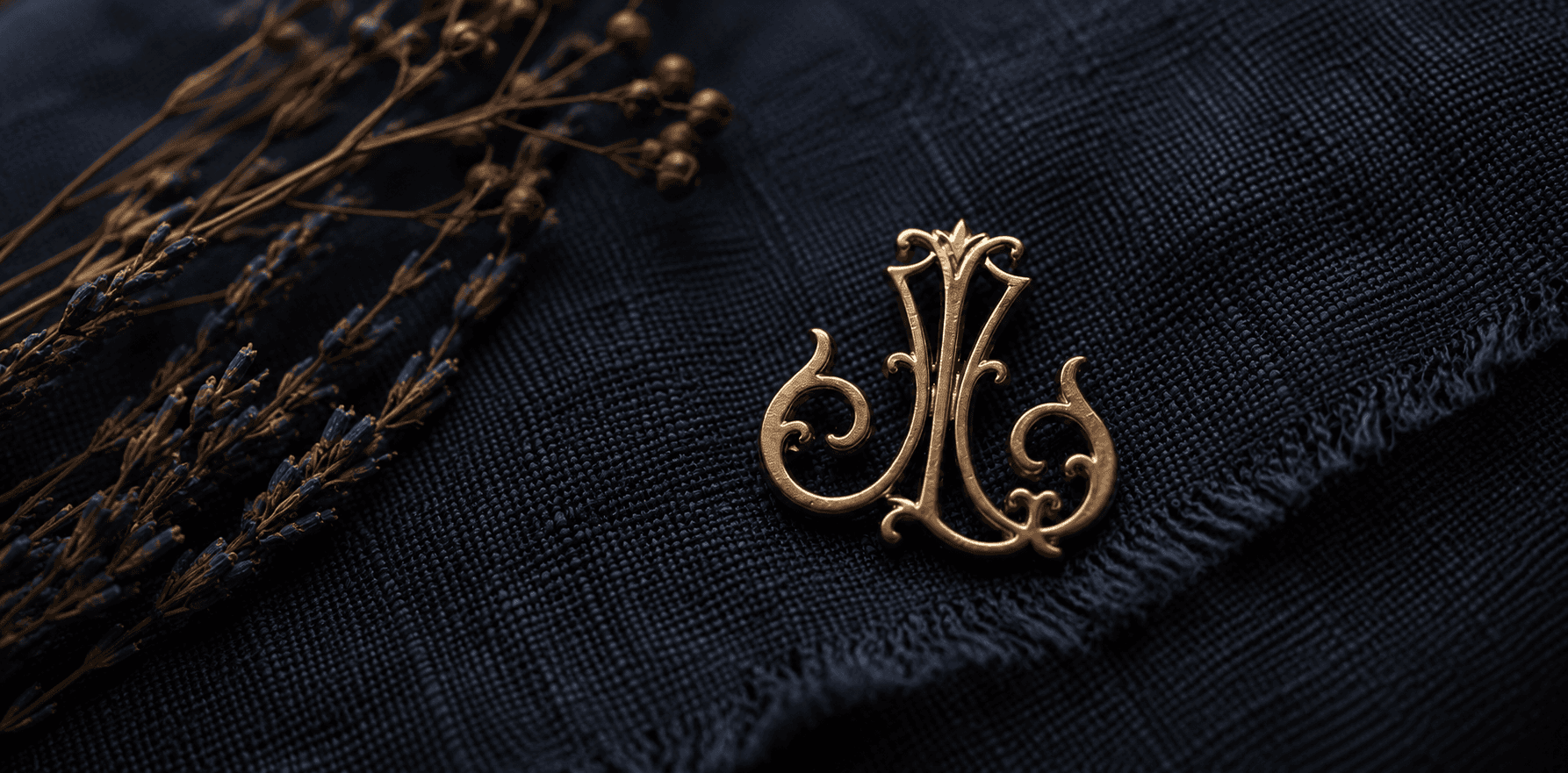
The client: an artisan heritage house
Lusha makes everyday Slavic ritual beautiful. The range is small-batch confiture, meadow blossom honey, hand-finished linen, and tea and table goods, made slowly and in limited runs for people who notice the details.
The products were already exquisite. What the brand lacked was a visual world to hold them together. Impeccable taste on the shelf, and nothing connecting one product to the next.
The starting point: a feeling and a name
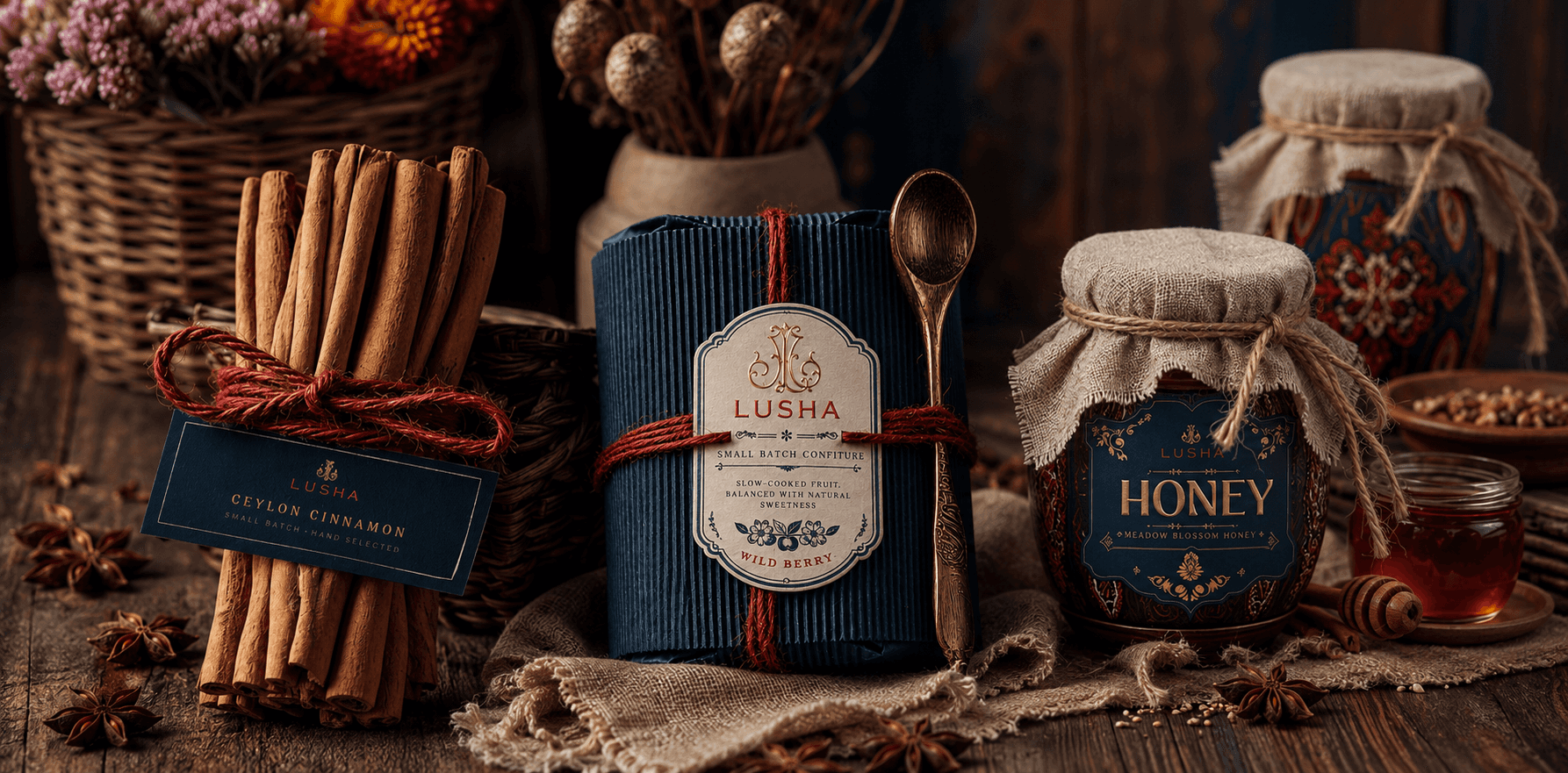
Lusha arrived as a feeling and a name, nothing more. That is the hardest and the most open place to begin. There was no mark to refine and no palette to extend. There was only a sense of what the brand should feel like: warm, crafted, rooted in ritual, made to be kept.
The first task was to name that feeling precisely enough to design against it. A brand this reliant on atmosphere fails the moment its parts stop agreeing, so the system had to be decided before any single asset was made.
The core idea: a mark that reads in two alphabets
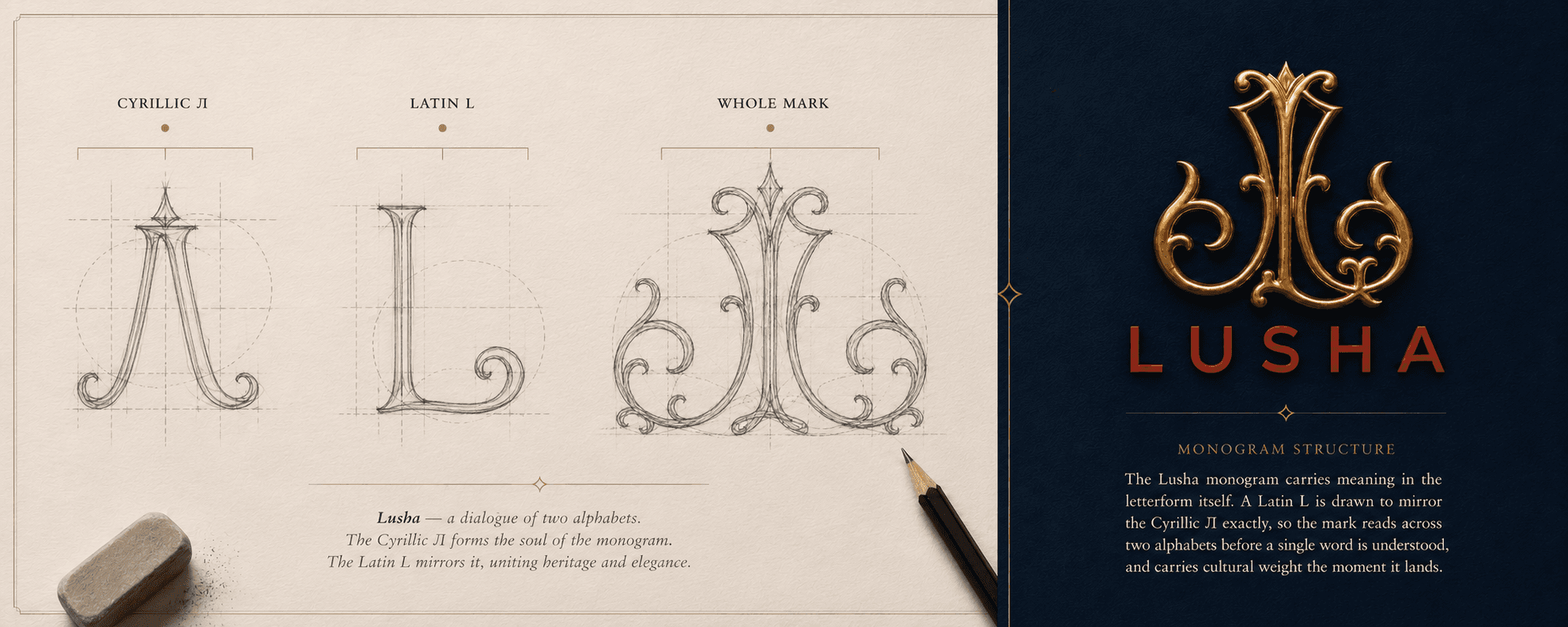
The turning point was the monogram. The Lusha mark is anchored by a Latin L that mirrors the Cyrillic exactly, so the letterform reads in both alphabets before a single Л word is understood. is shared across Russian, Ukrainian, Belarusian, Bulgarian, Serbian, Л and Macedonian, so the mark carries cultural weight the moment it lands.
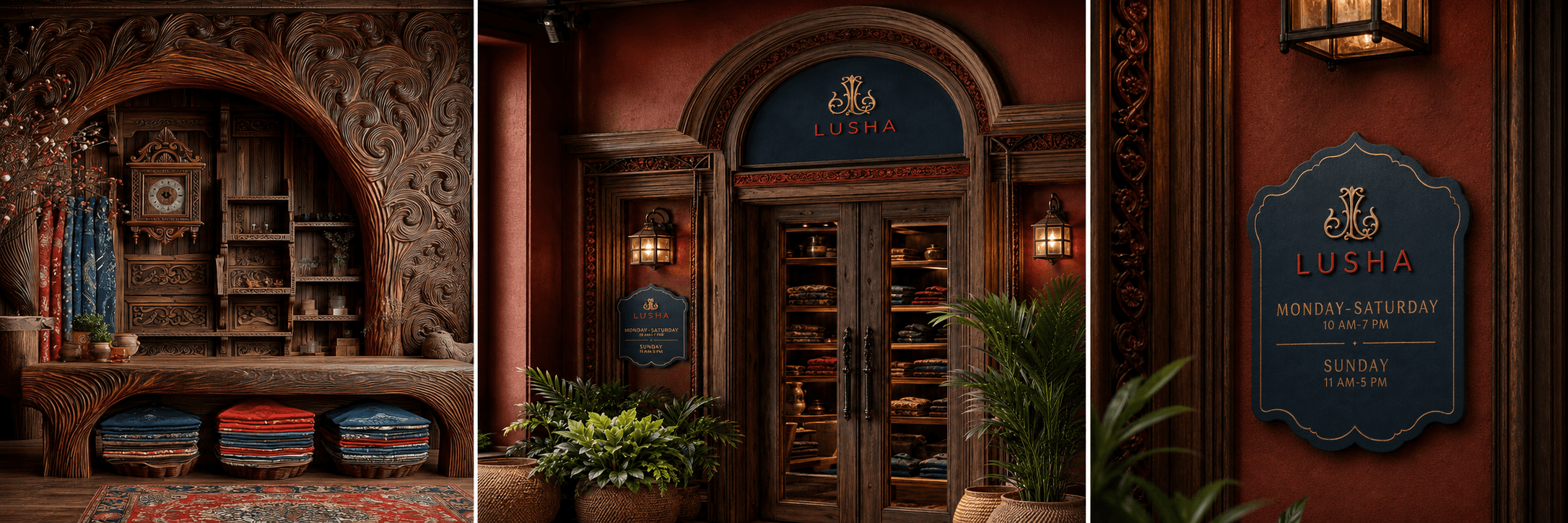
The form was cut from Slavic ornament and built to work everywhere. It is symmetrical enough to emboss, fine enough to foil in gold, and confident enough to stand alone on a shop door. That single mark anchors every touchpoint that follows.
The system: calm, exact, drawn from ritual
A brand is not a logo. It is a system, and every part of Lusha was built to agree with every other part.
The palette is navy and gold borrowed from old bindings and lacquer boxes, warmed with cream and a muted red, held to a 60/30/10 balance of deep teal, warm cream, and accent. The type pairs an editorial serif with a quiet sans. The layout follows an editorial grid of two to three columns, left-aligned, with generous negative space and layered depth. The guiding idea was structure you can feel.
The result is one calm, exact system that reads the same everywhere, from a honey label to the website.

The application: more than a dozen touchpoints
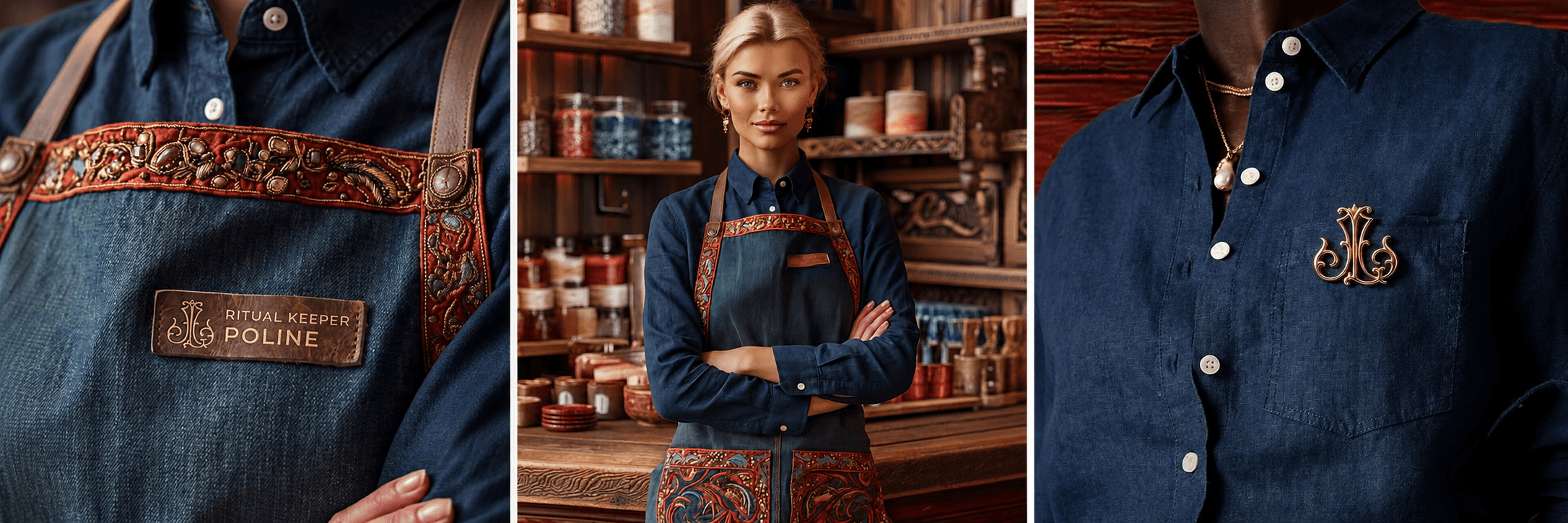
A brand only becomes real when it is applied. The Lusha system runs across tone of voice and positioning, the naming lockup and monogram, color, type, art direction, packaging, print and editorial, store branding, uniforms and nameplates, retail environment, merchandise, gifting, social, motion, and the website.
You can see it on the small-batch confiture and honey labels, the embroidered heritage linen, the letter pressed business cards, and packaging built to be used, loved, and passed on. Each piece is different, and each is unmistakably Lusha.
The outcome: a brand that feels like it always existed
Cue Studio gave a feeling a system: one monogram, one restrained palette, one voice, applied consistently until a brand-new label felt like it had always existed.
That is the real measure of the work. Not that it looks new, but that it feels inevitable.
What the Lusha project shows about brand building
A brand can be built from almost nothing when you design the feeling first and hold it consistently. Lusha began as a name and became a full visual system, drawn from one clear idea and applied across every touchpoint. This is how Cue Studio works. The studio takes a blurry idea and turns it into a structured visual brand system, strategic before it is visual, and built to last. Lusha Living is what that process produces.
You might also like


Have a question?
From pricing to process, here are a few common questions.
If you don’t see yours here, get in touch.