
Brand Is What People Feel: A brand is not a logo. It is the feeling. people carry about you, and that feeling can be designed on purpose
What is a brand, really?
A brand is the feeling a person has about a company when nobody from that company is in the room. It is not the logo, the color palette, or the typeface. Those are the tools. The brand is the impression those tools leave behind.
This distinction matters because most teams spend their energy on the visible layer and assume the feeling will follow. It rarely works in that order. The strongest brands decide what they want people to feel first, then build every visible choice to earn it.
This is not only a designer’s belief. Seth Godin, one of the most widely read marketing thinkers working today, defines a brand as the set of expectations, memories, stories and relationships that decide whether someone chooses one product over another. Not the logo. The expectations, and the feelings attached to them.
Why the feeling is the real asset
People do not remember most of what a company says. They remember how it made them feel. That memory is what they act on later, when they choose, recommend, or pay a premium.
A feeling is durable in a way that a message is not. Campaigns change. Products get replaced. The emotional residue a brand leaves behind is what carries across all of it. This is why a brand is a business asset, not a decoration. It shapes the decision before the decision is conscious.
The value of that feeling shows up in the numbers. Harvard Business Review found that customers who feel emotionally connected to a brand are on average 52 percent more valuable than those who are merely satisfied. When Les Binet and Peter Field studied 996 marketing campaigns, emotional campaigns proved roughly twice as profitable as rational ones over time. Feeling is not the soft part of a brand. It is the part that pays.
Consider the brands you trust. You did not audit their features. You formed a sense of them, and that sense did the work.
Where the feeling actually comes from
A brand feeling is built from many small, consistent signals rather than one big statement. Each signal is minor on its own. Together they compound into an impression that feels inevitable.
The signals include the shape of a logo, the spacing of a layout, the words a company chooses and the ones it refuses to use, the speed of a reply, the quality of a package in the hand. None of these is the brand. All of them contribute to it.
Consistency is what turns signals into a feeling. When every touchpoint agrees, the impression sharpens. When they contradict each other, the feeling blurs, and a blurred brand is a forgettable one.
How to design a feeling on purpose
Start with a single question. What do you want someone to feel after they meet this brand? Calm. Confident. Understood. Excited. Reassured. Name it in plain language before you design anything.
Then work backwards. Every choice becomes a test. Does this typeface feel calm, or does it feel loud? Does this sentence sound assured, or does it sound eager? Does this color reassure, or does it agitate? Design stops being a matter of taste and becomes a matter of intent.
Designing for feeling is not a leap of faith. It reflects how people actually decide. The Nobel laureate Daniel Kahneman showed that most choices are made by a fast, intuitive system long before conscious reasoning catches up. The neuroscientist Antonio Damasio found that people who lose the ability to feel also lose the ability to decide at all. Feeling is not the opposite of good judgement. It is the mechanism of it.
Three practices make the feeling hold:
First, decide the emotional target before the visual one. The look serves the feeling, not the other way around.
Second, protect consistency across every touchpoint. A brand that feels one way on its website and another in its emails has no feeling at all.
Third, edit. The feeling gets stronger when you remove the signals that dilute it. Most brands say too much and feel like too little.
First, decide the emotional target before the visual one. The look serves the feeling, not the other way around.
Cue Studio treats brand as an emotional response that can be designed, not left to chance. The process begins with the feeling a brand wants to create, then builds the visual identity, tone, and system to produce it consistently.
Lusha Living is a real example. It is an artisan heritage house that makes everyday Slavic ritual beautiful, from small-batch confiture and honey to hand-finished linen and table goods. When it came to Cue Studio, it was a feeling and a name, nothing more. No mark, no palette, no rules. The work gave that feeling a system: one monogram, one restrained palette, one voice, applied across every touchpoint until a new label felt like it had always existed. The feeling came first, and everything visible was built to produce it.

A clean, modern brand works the same way. VZBL, a brand-visibility studio, translates energy and reliability, bold but controlled, so its clients feel momentum they can trust. Zinnia Health, a nationwide network of recovery centres, translates calm, healing, and a focus on the self, so someone reaching out on their hardest day feels met rather than processed. Neither brand is warm and crafted like Lusha. Both still win on feeling. The emotion is different in each, but in every case it is designed, and it comes from restraint and consistency rather than decoration.
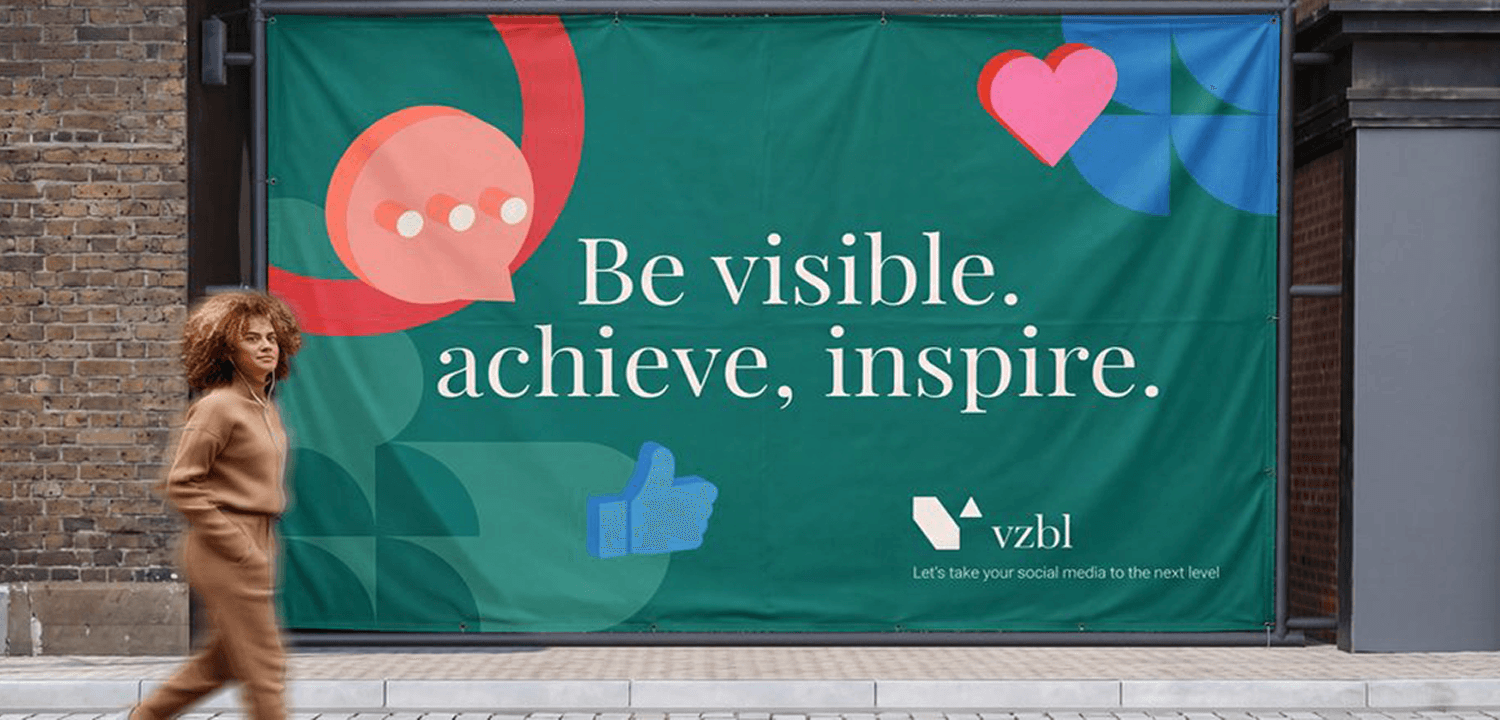
This is the difference between a brand that looks finished and one that feels like something. A logo can be delivered in a week. A feeling is built across every decision, and it is the part people actually remember. The work of a studio is to take that blurry, felt idea and turn it into a structured visual system that produces the feeling on purpose.
If you are building a brand and can already picture the logo but cannot yet name the feeling, you are starting in the wrong place. Name the feeling first. The rest follows.
References
Godin, Seth. “Define: Brand.” Seth’s Blog, 2009.
Magids, Zorfas, and Leemon. “The New Science of Customer Emotions.” Harvard Business Review, 2015.
Binet and Field. “The Long and the Short of It.” IPA, 2013.
Kahneman. “Thinking, Fast and Slow.” 2011.
Damasio. “Descartes’ Error.” 1994.
You might also like


Have a question?
From pricing to process, here are a few common questions.
If you don’t see yours here, get in touch.